Tricolored Heron
Egretta tricolor (Müller, 1776)
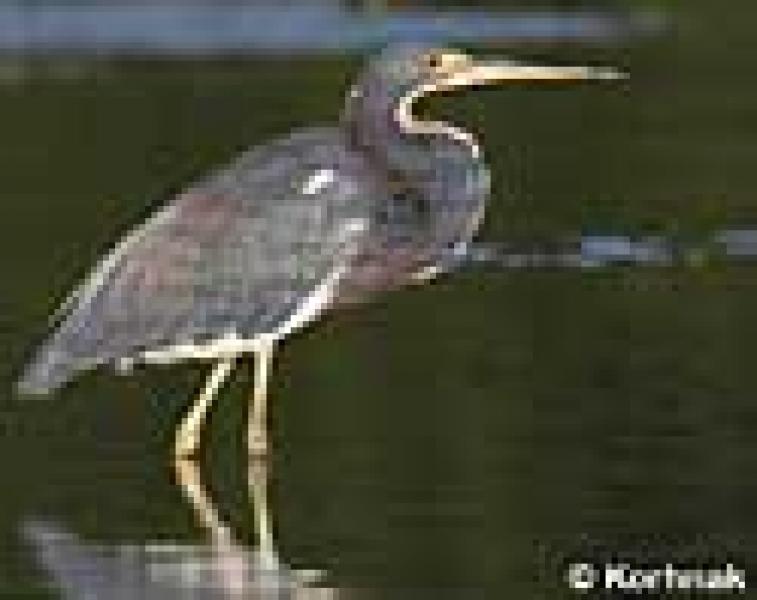
Egretta tricolor
Lawrence Korhnak
- Class
- Aves (Birds)
- Family
- Ardeidae (Herons, Bitterns, and Egrets)
- State Protection
- Protected Bird
Defined as a Protected Bird by New York State law, and the species may not be hunted or taken at any time in New York. Includes birds also defined as a game species, but for which no open seasons are set.
- Federal Protection
- Migratory Bird Treaty Act
The Migratory Bird Treaty Act implements various treaties and conventions between the U. S. and Canada, Japan, Mexico and the former Soviet Union for the protection of migratory birds. Under this Act, taking, killing, or possessing migratory birds, including nests or eggs, is unlawful unless specifically permitted by other regulations.
- State Conservation Status Rank
- S2
Imperiled in New York - Very vulnerable to disappearing from New York due to rarity or other factors; typically 6 to 20 populations or locations in New York, very few individuals, very restricted range, few remaining acres (or miles of stream), and/or steep declines.
- Global Conservation Status Rank
- G5
Secure globally - Common in the world; widespread and abundant (but may be rare in some parts of its range).
Summary
Did you know?
Formally called the Louisiana Heron, the tricolored heron is only found in North, Central, and South America (Frederick 1997).
State Ranking Justification
New York is near the northern limit of the tricolored heron range. They are restricted to the non-barrier salt marsh islands of southern Long Island.
Short-term Trends
Breeding populations of tricolored herons have been on a steady decline in the United States and New York (Sauer et al. 2007; McGowan and Corwin 2008). During the 1980s, an average of 17 pairs nested on Long Island, with the exception of an unusually high number of nesting birds during the 1989 season (McGowan and Corwin 2008). A recent survey conducted in 2007 showed an average of five breeding pairs of herons at five of the 14 known colonies (New York Natural Heritage Program 2009).
Long-term Trends
The tricolored heron was once the most abundant heron species in the southern United States during the early part of the twentieth century (Bent 1926). They greatly expanded their range during the 1940s -1970s, but then declined because of habitat loss due to development resulting from an increase in the human population (Frederick 1997). The tricolored heron was first sighted in New York during the 1830s and first reported as breeding in the state during the 1950s at Jamaica Bay Refuge. In 1989, over 50 pairs were reported breeding along southern Long Island (McGowan and Corwin 2008). However, the number of breeding pairs per year
Conservation and Management
Threats
Degradation of breeding and foraging habitat is the greatest threat to tricolored herons (McCrimmon 2006). Other threats include flooding, development, disturbance of nesting areas by human activity such as boating, fishing, dredge spoil deposition, and predation primarily by gulls, fox, and raccoons (Frederick 1997; New York Natural Heritage Program 2009).
Conservation Strategies and Management Practices
Continue to develop and conduct management and habitat restoration plans with state, local, and federal partners. Continue to monitor populations and discuss ways to improve survey methods. Compare state population trends against regional trends to determine population dynamics across various geographic areas and time periods. Consider developing and initiating a banding program to get a better handle on breeding populations and migratory patterns (Frederick 1997; McCrimmon 2006).
Research Needs
Although the tricolored heron is a much-studied heron, little is known about populations in New York. In general, more information is needed regarding life history and behavior, especially during the first year of life, in order to better protect this species (Frederick 1997). Research and identify key habitat characteristics necessary for breeding, foraging, and wintering areas. Identify all potential threats including those created by human disturbance as well as predators, pathogens, and invasive species, and seek ways to diminish their impact (McCrimmon 2006).
Habitat
Habitat
Tricolored herons inhabit a variety of aquatic habitats, including estuaries, salt marshes, lagoons, swamps, river deltas, mangrove swamps, and occasionally freshwater areas. They forage most often in wetlands (Fredrick 1997). In New York, tricolored herons utilize the coastal salt marsh scrub/shrub islands along the southern coast of Long Island; nesting in dense thickets or in trees and foraging in shallow estuaries and bays (New York Natural Heritage Program 2009).
Associated Ecological Communities
- High salt marsh
(guide)
A coastal marsh community that occurs in sheltered areas of the seacoast, in a zone extending from mean high tide up to the limit of spring tides. It is periodically flooded by spring tides and flood tides. High salt marshes typically consist of a mosaic of patches that are mostly dominated by a single graminoid species.
- Low salt marsh
(guide)
A coastal marsh community that occurs in sheltered areas of the seacoast, in a zone extending from mean high tide down to mean sea level or to about 2 m (6 ft) below mean high tide. It is regularly flooded by semidiurnal tides. The mean tidal range of low salt marshes on Long Island is about 80 cm, and they often form in basins with a depth of 1.6 m or greater.
- Salt panne
(guide)
A shallow depression in a salt marsh where the marsh is poorly drained. Pannes occur in both low and high salt marshes. Pannes in low salt marshes usually lack vegetation, and the substrate is a soft, silty mud. Pannes in a high salt marsh are irregularly flooded by spring tides or flood tides, but the water does not drain into tidal creeks. After a panne has been flooded the standing water evaporates and the salinity of the soil water is raised well above the salinity of sea-water.
Associated Species
Range
New York State Distribution
In New York, tricolored herons can be found on the non-barrier salt marsh islands in Jamaica Bay, Middle Hempstead Bay, South Oyster Bay, and Moriches Bay, Long Island. They have also been observed on the islands off Staten Island (McGowan and Corwin 2008; New York Natural Heritage Program 2009).
Global Distribution
The breeding range of the tricolored heron in the United States is primarily restricted to the Atlantic and Gulf of Mexico coasts, with occasional breeding along southern California, and inland in Kansas, northwest Texas, and Colorado (Frederick 1997; NatureServe 2009). In Central America, tricolored herons breed along both coasts of Mexico and Latin America. The breed on several Caribbean Islands as well, including the Bahamas, Cayman Islands, Jamaica, Puerto Rico, and St Thomas. In South America, tricolored herons can be found breeding along the coasts of the northern part of the continent; from northern Peru to northern Brazil (Frederick 1997; NatureServe 2009). The winter range of the tricolored heron in the United States is similar to the breeding range, but is more concentrated along the coasts of the states where the waters are warm. In Central America, the winter range also coincides with the breeding range, with the addition of Baja California as a wintering spot (Frederick 1997; NatureServe 2009).
Best Places to See
- Islands of Moriches Bay (Suffolk County)
- Islands of Jamaica Bay National Wildlife Refuge (Kings County)
- Islands of Middle Hempstead Bay and South Oyster Bay (Nassau County)
Identification Comments
Identifying Characteristics
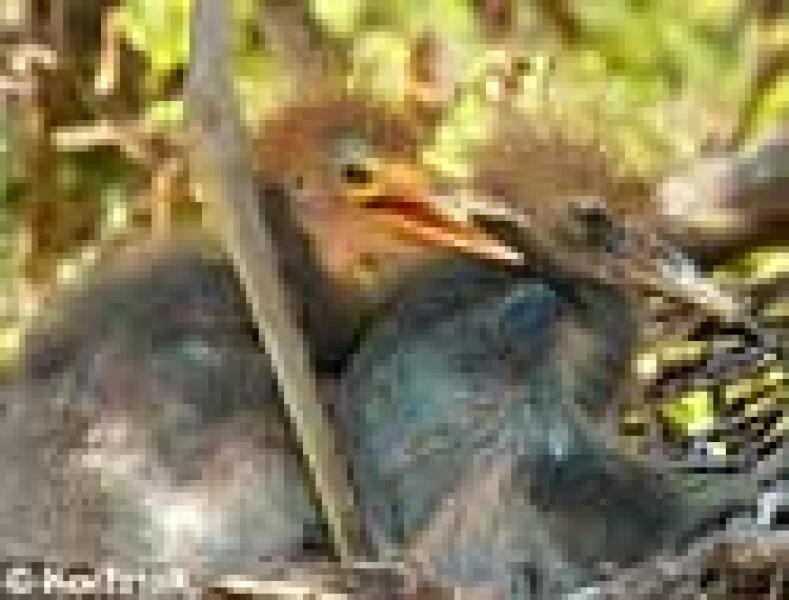
The tricolored heron is a medium-sized heron, about 66 cm in length with a wingspan of 90-95 cm (National Geographic Society 1999). The throat, foreneck, breast, and belly of all age classes are pale in color. Adults in non-breeding plumage have a slate gray head, back of neck, back, tail, and wings. The long back feathers are maroon in color. The chin and under parts of the wings are white. There are dark spots on the foreneck. The bill is light colored at the base, gradually turning black at the tip. The legs are white. The iris of the eye is brown with a pink inner margin. During breeding season, white plumes appear on the back of the head, the neck changes to a purple-mauve color the bill is blue at the base with a black tip, and the legs turn pink. The iris of the male's eyes becomes brick red while the inner margin of the iris in females changes from pink to deep red. Juveniles are medium-brown to gray in color, with a white stripe going down the throat and the foreneck spotty. The bill is yellow with a black tip, the iris of the eye is pale yellow, and the legs are yellow-green. Hatchlings are downy and are a fawn color with a gray back. Eggs are oval in shape, measuring on average 44 x 32 mm, and are a pale blue-green in color. The shell surface is smooth. Tricolored herons are colonial nesters, nesting 0.5-4 m above ground in trees or dense vegetation. Their nests are platform in shape, about 30 cm in diameter, and composed of twigs. Tricolored herons have been noted as being quite noisy. Vocalizations made by both males and females during courtship and breeding sounds like "Culh-Culh". When startled or faced with aggression, their call sounds like a deep "Ahh" (Frederick 1997).
Characters Most Useful for Identification
The contrasting colors of the dark upper body and white foreneck, breast and belly make the tricolored heron easily distinguishable from other heron species.
Best Life Stage for Proper Identification
Tricolored herons can be easily identified when the adults are in their breeding plumage.
Behavior
The tricolored heron has been described as a graceful bird-taking slow, careful, and light steps as it walks about. It flies with its head drawn in and legs behind its body (Bent 1926). When foraging, it often pursues its prey rather than "stand and wait", which is typical of other herons (Bent 1926; Frederick 1997). Tricolored herons are colonial nesters and often nest with other species. Males arrive at the colony from the wintering grounds first, establish their territory, and begin building the nest site, usually before a pair bond is formed. The male makes various stretching, bill snapping, and twig shaping displays to attract a female. Once a pair is established, the male gathers the rest of the nest material and the female takes over building the nest. Eggs are down about a week after the nest is complete. Clutch size is three to five eggs, and incubation lasts 20-25 days. Both parents take turns incubating the eggs (Frederick 1997).
Diet
The diet of the tricolored heron is mainly composed of fish, with minnows and killifish being their preferred prey. They will also forage for various types of small insects and crustaceans (Frederick 1997).
Best Time to See
Breeding dates in New York are poorly documented. Tricolored herons can be found breeding on the non-barrier islands of Long Island from April to early August (Frederick 1997).
- Active
- Reproducing
The time of year you would expect to find Tricolored Heron active and reproducing in New York.
Similar Species
- Great Blue Heron (Ardea herodias)
(guide)
The great blue heron is larger and does not have a white belly.
- Little Blue Heron (Egretta caerulea)
(guide)
The little blue heron is all dark in color, while the tricolored heron has a white foreneck, breast, and belly.
Tricolored Heron Images
Lawrence Korhnak
Lawrence Korhnak
Taxonomy
Tricolored Heron
Egretta tricolor (Müller, 1776)
- Kingdom Animalia
- Phylum Craniata
- Class Aves
(Birds)
- Order Pelecaniformes
(Pelicans and Cormorants)
- Family Ardeidae (Herons, Bitterns, and Egrets)
- Order Pelecaniformes
(Pelicans and Cormorants)
- Class Aves
(Birds)
- Phylum Craniata
Additional Resources
References
American Ornithologists' Union (AOU). 1983. Check-list of North American Birds, 6th edition. Allen Press, Inc., Lawrence, Kansas. 877 pp.
Bent, A. C. 1926. Life histories of North American marsh birds. Bull. U.S. Nat. Mus. 135.
Bull, John. 1974. Birds of New York State. Doubleday, Garden City, New York. 655 pp.
Frederick, P. C. 1997. Tricolored heron (Egretta tricolor), The birds of North America Online (A. Poole, Ed.). Ithaca: Cornell Lab of Ornithology. Available: http://bna.birds.cornell.edu/bna/species/306 (accessed 3 August 2009).
Harrison, C. 1978. A Field Guide to the Nests, Eggs and Nestlings of North American Birds. Collins, Cleveland, Ohio.
McCrimmon, D.A. 2006. Species group report for colonial nesting herons. Pages 33-42 of Appendix A1, Species group reports for birds in: New York State comprehensive wildlife conservation strategy. New York Department of Environmental Conservation. Albany NY.
McGowan, K.J. and K. Corwin, eds. 2008. The Second Atlas of Breeding Birds in New York State: 2000-2005. Cornell University Press, Ithaca, NY. 688 pp.
National Geographic Society (NGS). 1999. Field guide to the birds of North America. Third edition. National Geographic Society, Washington, DC. 480 pp.
NatureServe. 2009. NatureServe Explorer: An online encyclopedia of life [web application]. Version 6.1. NatureServe, Arlington, Virginia. Available http://www.natureserve.org/explorer. (Accessed: January 18, 2009)
New York Natural Heritage Program. 2009. Biotics Database. New York State Department of Environmental Conservation. Albany, NY.
New York Natural Heritage Program. 2024. New York Natural Heritage Program Databases. Albany, NY.
New York State Breeding Bird Atlas. 1985. Final breeding bird distribution maps, 1980-1985. New York State Department of Environmental Conservation, Wildlife Resources Center. Delmar, NY.
Palmer, R. S. (editor). 1962. Handbook of North American birds. Vol. 1. Loons through flamingos. Yale University Press, New Haven. 567 pp.
Peterson, R. T. 1980b. A field guide to the birds of eastern and central North America. Fourth Edition. Houghton Mifflin Co., Boston, MA. 384 pp.
Root, T. 1988. Atlas of wintering North American birds: An analysis of Christmas Bird Count data. University of Chicago Press. 336 pp.
Sauer, J.R., J.E. Hines, and J. Fallon. 2007. The North American breeding bird survey, results and analysis 1966-2006. Version 10.13.2007. US Geological Survey, Patuxent Wildlife Research Center, Laurel, MD.
Spendelow, J. A. and S. R. Patton. 1988. National Atlas of Coastal Waterbird Colonies in the Contiguous United States: 1976-1982. U.S. Fish and Wildlife Service, Biological Report 88(5). x + 326 pp.
Terres, J. K. 1980. The Audubon Society encyclopedia of North American birds. Alfred A. Knopf, New York.
Links
About This Guide
Information for this guide was last updated on: April 18, 2019
Please cite this page as:
New York Natural Heritage Program. 2024.
Online Conservation Guide for
Egretta tricolor.
Available from: https://guides.nynhp.org/tricolored-heron/.
Accessed April 20, 2024.