Barn Owl
Tyto alba (Scopoli, 1769)
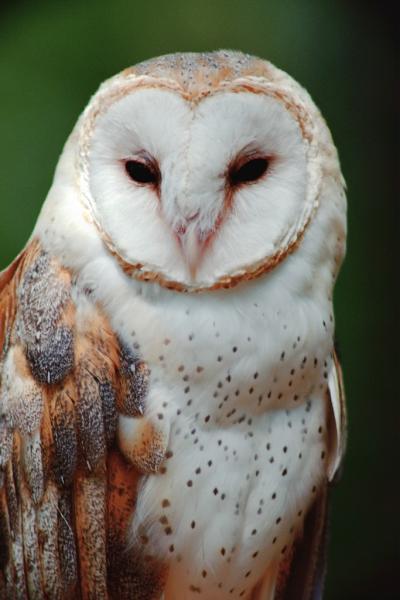
Barn Owl
US DOI-Bureau of Reclamation
- Class
- Aves (Birds)
- Family
- Tytonidae ( Barn Owls)
- State Protection
- Protected Bird
Defined as a Protected Bird by New York State law, and the species may not be hunted or taken at any time in New York. Includes birds also defined as a game species, but for which no open seasons are set.
- Federal Protection
- Migratory Bird Treaty Act
The Migratory Bird Treaty Act implements various treaties and conventions between the U. S. and Canada, Japan, Mexico and the former Soviet Union for the protection of migratory birds. Under this Act, taking, killing, or possessing migratory birds, including nests or eggs, is unlawful unless specifically permitted by other regulations.
- State Conservation Status Rank
- S1S2
Critically Imperiled or Imperiled in New York - Especially or very vulnerable to disappearing from New York due to rarity or other factors; typically 20 or fewer populations or locations in New York, very few individuals, very restricted range, few remaining acres (or miles of stream), and/or steep declines. More information is needed to assign either S1 or S2.
- Global Conservation Status Rank
- G5
Secure globally - Common in the world; widespread and abundant (but may be rare in some parts of its range).
Summary
Did you know?
In New York, resident barn owls nest in all seasons and will double brood within a year if the prey populations are abundant. For example, in 1938 a female laid eggs in March and the again in November. The following year, the same female had nestlings in July then again in December (Levine 1998).
State Ranking Justification
While Barn Owls are difficult to locate because they rarely vocalize and are nocturnal, a comparison of the two New York Breeding Bird Atlases show that the number of blocks where Barn Owls have been reported has greatly declined. During the first Breeding Bird Atlas, Barn Owls were reported from 126 Breeding Bird Atlas blocks with 64 blocks where probable or confirmed breeding was recorded (Andrle and Carroll 1988). Between 2000 and 2005, the second Breeding Bird Atlas reported a total of 28 blocks. Fourteen of those blocks were recorded as probable or confirmed breeding (McGowan and Corwin 2008). The current breeding records are largely clustered from three areas: Staten Island, Kennedy Airport, and the north shore area of Long Island around Oyster Bay. Barn Owls now appear to be very rare in upstate New York and not particularly regular in their occurrence. In addition, breeding success for this species often depends on human intervention such as the placement of nest boxes in suitable habitat.
Short-term Trends
When comparing data from the two Breeding Bird Atlases, it appears that the number of breeding Barn Owls in New York is declining. Between 1980 and 1985, probable and confirmed breeding was reported from 64 Breeding Bird Atlas blocks in 30 counties (Andrle and Carroll 1988). A decline is noted in the second Breeding Bird Atlas (2000-2005) with probable or confirmed breeding reported from 14 Breeding Bird Atlas blocks in 10 counties. Most of the counties where there was confirmed breeding Barn Owls are in southern New York (McGowan and Corwin 2008). Barn Owls seem to be responding to nest box placement in areas in southern New York. For example, Jamaica Bay Wildlife Refuge has several nest boxes in place that are used regularly by Barn Owls. The milder climate and placement of nest boxes may be two reasons why this species has persisted in southern New York. Breeding Bird Survey data is too sparse in New York to determine trends (Sauer et al. 2007). There is limited data available for non-breeding season, therefore trends are not specifically known.
Long-term Trends
Historically, Barn Owls were known from Long Island, Staten Island, the Finger Lakes region, Hudson Valley, Genesee Valley, Wayne and Monroe counties along Lake Ontario, and the lowlands of Lake Erie and Lake Ontario (King 2005). They continue to persist in some of these counties. It appears that the Barn Owl range may be decreasing in New York as most regular occurrence of Barn Owls are now on Staten Island and Long Island.
Conservation and Management
Threats
While one of the main reasons why Barn Owl populations are unstable in New York is due to New York generally being the northern limits of its range, there are several other factors that may affect populations in the state. Barn Owls are dependent on open, grassy habitat where small mammal populations are fairly abundant. In New York, farmland provides most of the suitable habitat for this species. However, farmland is decreasing statewide and many of the remaining farms are replacing hayfields with row crops. In addition, Barn Owls are known to use farm structures for roosting. Screening has been placed in the openings of these farm structures to exclude Rock Pigeons thereby excluding Barn Owls. Secondary poisoning may also happen in more populated areas as people try to control rodent populations. Automotive collisions are also a threat (King 2005).
Conservation Strategies and Management Practices
It appears that Barn Owl breeding success in New York is heavily dependent on the placement of nest boxes in suitable habitat. Each nesting pair needs approximately 0.25 square miles of suitable habitat surrounding a nest box. Preservation and expansion of dense grass foraging habitats are also important. Grassland habitats can also be managed by light grazing or mowing to maintain the habitat without altering dense ground cover used by small mammals (NatureServe 2004). Another potential management tool is taking advantage of Landowner Incentive Programs to protect grassland habitats.
Research Needs
It would be valuable to determine the feasibility of using captive-raised Barn Owls to restore local populations (King 2005).
Habitat
Habitat
Barn Owls are often found in open and partly open country including grasslands, marshes, and agricultural areas. They are often around human habitation. Barn Owls are cavity-nesting birds that use natural as well as human-created cavities. Preferred man-made structures include large platforms within barns and silos, tunnels dug into silage in roofed or topless silos, and barn cupola shelves. They have also used feed bins, church steeples and belfries, platforms within commercial and industrial buildings, attics of abandoned or occupied houses, ledges within chimneys, and platforms beneath bridges (NatureServe 2004). Foraging habitats are typically open areas, such as grassy fields (natural and agricultural), wet meadows, and fresh and salt water marshes. Barn Owls typically use dense conifers as roost sites during the winter, but have used nest boxes as well (NatureServe 2004).
Associated Ecological Communities
- Brackish meadow
(guide)
A moist, moderately well-drained brackish (salinity 0.5-18 ppt) perennial grassland with occasional isolated shrubs that is typically situated in a belt at the upper edge of salt marshes bordering sandy uplands, but may occupy large portions of interdunal basins. The community usually develops in areas with a unique combination of soils and hydrology, on deep deposits of periodically windblown or overwashed gleyed sands that are usually flooded only during spring tides and during major coastal storms, approximately two to three times per year.
- Brackish tidal marsh
(guide)
A marsh community that occurs where water salinity ranges from 0.5 to 18.0 ppt, and water is less than 2 m (6 ft) deep at high tide. The vegetation in a brackish tidal marsh is dense and dominated by tall grass-like plants.
- Cropland/field crops
An agricultural field planted in field crops such as alfalfa, wheat, timothy, and oats. This community includes hayfields that are rotated to pasture.
- Freshwater tidal marsh
(guide)
A marsh community that occurs in shallow bays, shoals, and at the mouth of tributaries of large tidal river systems, where the water is usually fresh (salinity less than 0.5 ppt), and less than 2 m (6 ft) deep at high tide. Typically there are two zones in a freshwater tidal marsh: a low-elevation area dominated by short, broadleaf emergents bordering mudflats or open water, and a slightly higher-elevation area dominated by tall grass-like plants.
- High salt marsh
(guide)
A coastal marsh community that occurs in sheltered areas of the seacoast, in a zone extending from mean high tide up to the limit of spring tides. It is periodically flooded by spring tides and flood tides. High salt marshes typically consist of a mosaic of patches that are mostly dominated by a single graminoid species.
- Interior of barn/agricultural building
The interior spaces of a barn or other agricultural building which provides shelter for livestock or storage space for agricultural products (hay, straw, silage, etc.).
- Interior of non-agricultural building
The interior spaces of a house, garage, commercial building, or industrial building that is used primarily by people for living space, work space, or storage space.
- Low salt marsh
(guide)
A coastal marsh community that occurs in sheltered areas of the seacoast, in a zone extending from mean high tide down to mean sea level or to about 2 m (6 ft) below mean high tide. It is regularly flooded by semidiurnal tides. The mean tidal range of low salt marshes on Long Island is about 80 cm, and they often form in basins with a depth of 1.6 m or greater.
- Maritime grassland
(guide)
A grassland community that occurs on rolling outwash plains of the glaciated portion of the Atlantic coastal plain, near the ocean and within the influence of offshore winds and salt spray.
- Pastureland
Agricultural land permanently maintained (or recently abandoned) as a pasture area for livestock.
- Salt panne
(guide)
A shallow depression in a salt marsh where the marsh is poorly drained. Pannes occur in both low and high salt marshes. Pannes in low salt marshes usually lack vegetation, and the substrate is a soft, silty mud. Pannes in a high salt marsh are irregularly flooded by spring tides or flood tides, but the water does not drain into tidal creeks. After a panne has been flooded the standing water evaporates and the salinity of the soil water is raised well above the salinity of sea-water.
- Successional old field
A meadow dominated by forbs and grasses that occurs on sites that have been cleared and plowed (for farming or development), and then abandoned or only occasionally mowed.
Range
New York State Distribution
Barn Owls are predominantly found in the southern part of New York in Bronx, Kings, Nassau, Queens, Richmond, and Suffolk counties. However, they are occassionally found in other areas of New York excluding mountainous areas and the very northern part of the state.
Global Distribution
In the Americas, Barn Owls are found from southern Canada and the northern United States south to southern South America, Greater Antilles (except Puerto Rico), and Lesser Antilles (AOU 1983, Marti 1992). Population densities vary within this range with low densities at the northern periphery (Marti 1992). Populations in northern North America are partially migratory. Barn Owls have been introduced (1958 and later) in Hawaii and are now on all the main islands (AOU 1983). Barn Owls occur in the Old World from British Isles, southern Russia, and southern Siberia south through Eurasia and Africa to southern Africa, Madagascar, East Indies, and Australia.
Best Places to See
- Jamaica Bay (Kings, Queens Counties)
Identification Comments
Identifying Characteristics
Barn Owls are characterized by their whitish, heart-shaped face. The head lacks ear tufts and the eyes are small and dark. Upper plumage is golden-brown with varying amounts of gray. The breast and belly are whitish and can be lightly to heavily speckled with black. Barn Owl body length varies from 30-37 centimeters and their wing span range is 104 to 120 centimeters (NatureServe 2004). Generally, females are larger and heavier than males and are also darker and more speckled, although there are variations in both sexes that can make it difficult to determine the sex of individuals. Juveniles are similar to adults. Young males are more buff on the breast, but lack the heavy speckled appearance of adult females. Molt patterns can be used to determine age until about 36 months (NatureServe 2004). Females lay 5-7 white eggs. Barn Owls rarely vocalize. However, they have up to 15 vocal sounds and two non-vocal sounds have been described (Bunn et al. cited in NatureServe 2004). "B. Colvin (pers. comm.) described the five most frequently heard vocalizations: 1) the "contact call" is a drawn-out screech frequently given in flight when approaching a nest site from a distance; 2) the "alarm call" is an intense screech made in response to human or other disturbance which is typically given at a nest site and only after chicks have hatched; 3) "squeaking/ticking calls" are rapid, high-pitched notes which are associated with pair bond maintenance or distress situations; these calls are commonly produced during courtship, incubation, and first evening flights after chicks have hatched; 4) "snoring" is a greatly varying hiss which is repeated persistently by juveniles in and out of the nest; this call is used for food begging and may be heard at nest sites from sunset to sunrise; and 5) the "defensive hiss" is a very loud and prolonged hiss typically produced by nestlings when disturbed" (NatureServe 2004).
Best Time to See
Barn Owls can be found throughout the year in many parts of New York State. However, they are most often found on Long Island and the New York City area during the breeding and non-breeding seasons. Barn Owls are often difficult to locate because they rarely vocalize and are nocturnal.
- Reproducing
The time of year you would expect to find Barn Owl reproducing in New York.
Similar Species
- Short-eared Owl (Asio flammeus)
(guide)
Short-eared Owls have a darker face and underpart, yellow eyes instead of black, and shorter legs. Barn Owls are less streaked. Both species can be found in similar habitats.
Barn Owl Images
US DOI-Bureau of Reclamation
Taxonomy
Barn Owl
Tyto alba (Scopoli, 1769)
- Kingdom Animalia
- Phylum Craniata
- Class Aves
(Birds)
- Order Strigiformes
(Owls)
- Family Tytonidae ( Barn Owls)
- Order Strigiformes
(Owls)
- Class Aves
(Birds)
- Phylum Craniata
Additional Resources
References
American Ornithologists' Union (AOU). 1983. Check-list of North American Birds, 6th edition. Allen Press, Inc., Lawrence, Kansas. 877 pp.
Andrle, R. F., and J. R. Carrol, editors. 1988. The atlas of breeding birds in New York State. Cornell Univ., Ithaca, New York. 551 pp.
Bent, A. C. 1938. Life histories of North American birds of prey. Part 2. U.S. Nat. Mus. Bull. 170. 482 pp., 92 pls.
Bull, John. 1974. Birds of New York State. Doubleday, Garden City, New York. 655 pp.
Bunn, D. S., A. B. Warburton, and R. D. S. Wilson. 1982. The barn owl. Buteo Books, Vermillion, South Dakota. 246 (or 264?) pp.
Clark, D. R., Jr., and C. M. Bunck. 1991. Trends in North American small mammals found in common barn-owl (TYTO ALBA) dietary studies. Can. J. Zool. 69:3093-3102.
Clark, R. J., D. G. Smith, and L. H. Kelso. 1978. Working bibliography of owls of the world. National Wildlife Federation, Sci. & Tech. Ser. No. 1. 336 pp.
Eckert, Allan W. 1978. The Owls of North America. Weather-vane Books, New York. 278 pp.
Ehrlich, P. R., D. S. Dobkin, and D. Wheye. 1992. Birds in Jeopardy: the Imperiled and Extinct Birds of the United States and Canada, Including Hawaii and Puerto Rico. Stanford University Press, Stanford, California. 259 pp.
Evers, D. C. 1992. A guide to Michigan's endangered wildlife. Univ. Michigan Press, Ann Arbor. viii + 103 pp.
Fisher, A.K. 1893. The hawks and owls of the United States in their relation to agriculture. Washington U.S. Dept. of Agriculture Bull. no. 6. 210 pp.
Gustafson, M. E. 1991. Diet and habitat selection in Ohio nesting barn owls (TYTO ALBA). M.S. thesis, Ohio State Univ. ix + 92 pp.
Hands, H. M., R. D. Drobney, and M. R. Ryan. 1989. Status of the common barn-owl in the northcentral United States. Missouri Coop. Fish Wildl. Res. Unit Rep. 19 pp.
Harrison, C. 1978. A Field Guide to the Nests, Eggs and Nestlings of North American Birds. Collins, Cleveland, Ohio.
Harrison, H. H. 1979. A field guide to western birds' nests. Houghton Mifflin Company, Boston. 279 pp.
Johnsgard, P. 1988. North American owls: biology and natural history. Smithsonian Inst. Press. 336 pp.
King, Matthew. 2005. Species group report for barn owl. Pages 8-10 of Appendix A1, Species group reports for birds in: New York State comprehensive wildlife conservation strategy. New York Department of Environmental Conservation. Albany NY.
Kirk, D. A., D. Hussell, and E. Dunn. 1995. Raptor population status and trends in Canada. Bird Trends (Canadian Wildlife Service) 4:2-9.
Marti, C. D. 1989a. Common barn-owl TYTO ALBA. Biographies of North American birds, Am. Ornithol. Union. Draft copy of proposed publication. 12 pp.
Marti, C. D. 1994. Barn owl reproduction: patterns and variation near the limit of the species' distribution. Condor 96:468-484.
Marti, C. D., and P. W. Wagner. 1985. Winter mortality in common barn-owls and its effect on population density and reproduction. Condor 87:111-115.
Marti, C.D. 1992. Barn Owl (TYTO ALBA). In A. Poole, P. Stettenheim, and F. Gill, editors, The Birds of North America, No. 1. Academy of Natural Sciences, Philadelphia, and American Ornithologists' Union, Washington, DC. 16 pp.
McGowan, K.J. and K. Corwin, eds. 2008. The Second Atlas of Breeding Birds in New York State: 2000-2005. Cornell University Press, Ithaca, NY. 688 pp.
NatureServe. 2004. NatureServe Explorer: An online encyclopedia of life [web application]. Version 4.0. NatureServe, Arlington, Virginia. Available http://www.natureserve.org/explorer. (Accessed: October 25, 2004 ).
New York Natural Heritage Program. 2024. New York Natural Heritage Program Databases. Albany, NY.
New York State Breeding Bird Atlas. 1985. Final breeding bird distribution maps, 1980-1985. New York State Department of Environmental Conservation, Wildlife Resources Center. Delmar, NY.
Nicholls, T. H., and M. R. Fuller. 1987. Owl telemetry techniques. Pages 294-301 IN R.W. Nero, R.J. Clark, R.J. Knapton, and R.H. Hamre, editors. Biology and conservation of northern forest owls. USDA Forest Service, Gen. Tech. Rep. RM-142.
Pendleton, B. A. G., B. A. Millsap, K. W. Cline, and D. M. Bird. 1987. Raptor management techniques manual. National Wildlife Federation, Sci. and Tech. Ser. No. 10. 420 pp.
Randi, E., et al. 1991. Allozyme divergence and phylogenetic relationships within the Strigiformes. Condor 93:295-301.
Rosenburg, C. 1992. Barn owl, TYTO ALBA. Pages 253-279 in K. J. Schneider and D. M. Pence, editors. Migratory nongame birds of management concern in the Northeast. U.S. Fish and Wildlife Service, Newton Corner, Massachusetts. 400 pp.
Russell, R. W., et al. 1991. A visual study of migrating owls at Cape May Point, New Jersey. Condor 93:55-61.
Sauer, J.R., J.E. Hines, and J. Fallon. 2007. The North American breeding bird survey, results and analysis 1966-2006. Version 10.13.2007. US Geological Survey, Patuxent Wildlife Research Center, Laurel, MD.
Taylor, I. 1994. Barn owls: predator-prey relationships and conservation. Cambridge Univ. Press, New York.
Taylor, I. R. 1991. Effects of nest inspections and radiotagging on barn owl breeding success. J. Wildl. Manage. 55:312-315.
Terres, J. K. 1980. The Audubon Society encyclopedia of North American birds. Alfred A. Knopf, New York.
U.S. Fish and Wildlife Service (USFWS). 1987. Migratory nongame birds of management concern in the United States: the 1987 list. U.S. Fish and Wildlife Service, Office of Migratory Bird Management, Washington, D.C. 63 pp.
Voous, K. H., and A. Cameron. 1989. Owls of the Northern Hemisphere. MIT Press, Cambridge, Massachusetts. 320 pp.
Walker, L.W. 1974. The book of owls. Alfred A. Knopf, Inc. New York. 255 pp.
Links
About This Guide
Information for this guide was last updated on: December 31, 2007
Please cite this page as:
New York Natural Heritage Program. 2024.
Online Conservation Guide for
Tyto alba.
Available from: https://guides.nynhp.org/barn-owl/.
Accessed April 26, 2024.