Vernal Pool
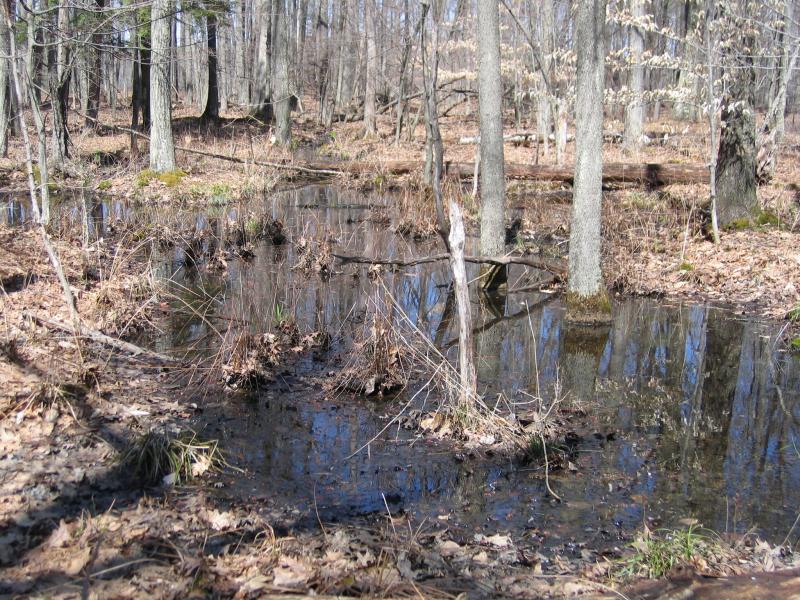
Vernal pool at Saratoga National Historical Park
Gregory J. Edinger
- System
- Palustrine
- Subsystem
- Forested Mineral Soil Wetlands
- State Protection
- Not Listed
Not listed or protected by New York State.
- Federal Protection
- Not Listed
- State Conservation Status Rank
- S3
Vulnerable in New York - Vulnerable to disappearing from New York due to rarity or other factors (but not currently imperiled); typically 21 to 80 populations or locations in New York, few individuals, restricted range, few remaining acres (or miles of stream), and/or recent and widespread declines.
- Global Conservation Status Rank
- G4
Apparently Secure globally - Uncommon in the world but not rare; usually widespread, but may be rare in some parts of its range; possibly some cause for long-term concern due to declines or other factors.
Summary
Did you know?
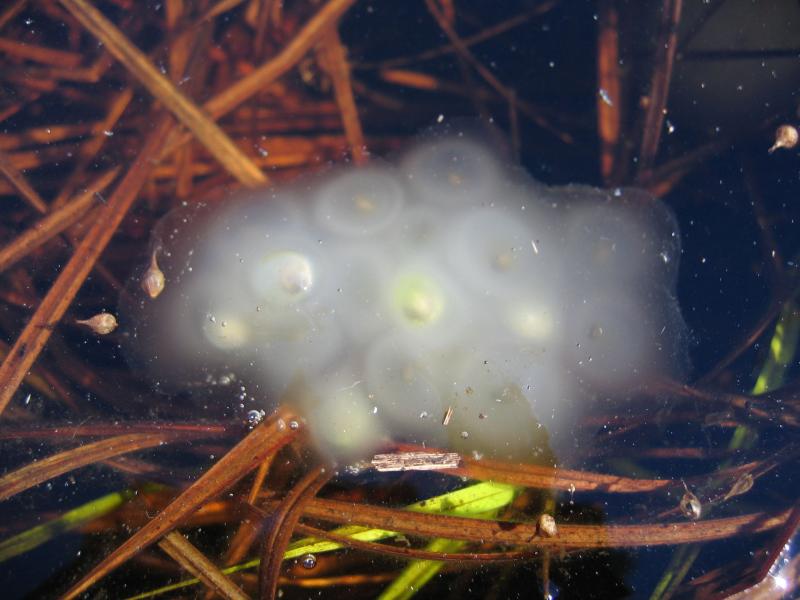
Many animals depend on vernal pools, especially for breeding. Most of these animals such as frogs, toads, turtles, and salamanders spend a majority of their life in nearby wetlands but migrate to breed or feed in productive vernal pools. Fingernail clams and air-breathing snails live their entire life in vernal pools and must burrow beneath leaves and mud when the pool dries until the water returns. Fairy shrimp produce eggs that remain in the dry pool after the adult's death and hatch after the pool refills.
State Ranking Justification
There are probably a few thousand occurrences statewide. Vernal pools are typically small (i.e., generally under one acre) and may be overlooked as wetlands after the water draws down. A few documented occurrences have good viability and are protected on public land or private conservation land. This community has statewide distribution, and likely includes several high quality examples. The current trend of this community is probably stable for occurrences on public land, or declining slightly elsewhere due to moderate threats related to development pressure, alteration to the natural hydrology, and reduced protection regulations for isolated wetlands. This community has probably declined moderately from historical numbers likely correlated with logging and development of the surrounding landscape.
Short-term Trends
The number and acreage of vernal pools in New York have probably declined in recent decades as a result of reduced protection regulations for isolated wetlands. Their relatively small size and seasonal hydroperiod may have contributed to the decline with many occurrences going undetected as regulated wetlands.
Long-term Trends
The number and acreage of vernal pools in New York have declined moderately from historical numbers likely correlated to the alteration to the natural hydrology and direct destruction, in both forested and urban areas.
Conservation and Management
Threats
In 2001, the federal Supreme Court ruled that the US Congress did not give authority to the US Army Corps of Engineers (US ACE) under section 404 of the Clean Water Act to regulate the filling of isolated wetlands. This decision led US EPA and US ACE officials to issue guidance in January 2003 that made it more difficult for regulators to protect isolated wetlands, such as vernal pools (Brooks and Paton 2005). Vernal pools are threatened by development (e.g., agriculture, residential, roads) and its associated run-off (e.g., septic, silt, nutrients), habitat alteration (e.g., excessive logging, pollution, trash dumping), and recreational overuse (e.g., ATVs). Alteration to the natural hydrological regime is also a threat to this community (e.g., ditching, impoundments).
Conservation Strategies and Management Practices
Where practical, establish and maintain a natural wetland buffer to reduce storm-water, pollution, and nutrient run-off, while simultaneously capturing sediments before they reach the vernal pool. Buffer width should take into account the erodibility of the surrounding soils, slope steepness, and use of the surrounding upland by vernal pool fauna. Wetlands protected under Article 24 are known as New York State "regulated" wetlands. The regulated area includes the wetlands themselves, as well as a protective buffer or "adjacent area" extending 100 feet landward of the wetland boundary (NYS DEC 1995). Vernal pools seldom meet the size criteria for state regulated wetland. If possible, minimize the number and size of impervious surfaces in the surrounding landscape. Avoid habitat alteration within the wetland and surrounding landscape. For example, roads and trails should be routed around vernal pools, and ideally should not pass through the buffer area. Restore vernal pools that have been unnaturally disturbed (e.g., remove obsolete impoundments and ditches in order to restore the natural hydrology). Prevent the spread of invasive exotic species into the wetland through appropriate direct management, and by minimizing potential dispersal corridors, such as roads.
Specific management recommendations for vernal pools can be found in the following: 1) Best Development Practices: Conserving Pool-Breeding Amphibians in Residential and Commercial Developments in the Northeastern United States (Calhoun and Klemens 2002), and 2) Forestry Habitat Management Guidelines for Vernal Pool Wildlife (Calhoun and deMaynadier 2004).
Development and Mitigation Considerations
When considering road construction and other development activities minimize actions that will change what water carries and how water travels to this community, both on the surface and underground. Water traveling over-the-ground as run-off usually carries an abundance of silt, clay, and other particulates during (and often after) a construction project. While still suspended in the water, these particulates make it difficult for aquatic animals to find food; after settling to the bottom of the wetland, these particulates bury small plants and animals and alter the natural functions of the community in many other ways. Thus, road construction and development activities near this community type should strive to minimize particulate-laden run-off into this community. Water traveling on the ground or seeping through the ground also carries dissolved minerals and chemicals. Road salt, for example, is becoming an increasing problem both to natural communities and as a contaminant in household wells. Fertilizers, detergents, and other chemicals that increase the nutrient levels in wetlands cause algae blooms and eventually an oxygen-depleted environment where few animals can live. Herbicides and pesticides often travel far from where they are applied and have lasting effects on the quality of the natural community. So, road construction and other development activities should strive to consider: 1. how water moves through the ground, 2. the types of dissolved substances these development activities may release, and 3. how to minimize the potential for these dissolved substances to reach this natural community.
Inventory Needs
Survey for occurrences statewide to advance documentation and classification of vernal pools. Finding occurrences with several pools forming a complex should be a priority. A statewide review of vernal pools is desirable.
Research Needs
Research is needed to fill information gaps about vernal pools, especially to advance our understanding of their classification, hydrology, floristic variation, and characteristic fauna. Research is needed to see if vernal pool species assemblages are related to the underlying bedrock (e.g., acidic vs. alkaline) and/or the surrounding forest type (e.g., needle-leaf evergreen vs. broad-leaf deciduous).
Rare Species
- Ambystoma tigrinum (Tiger Salamander) (guide)
- Aplexa elongata (Lance Aplexa) (guide)
- Carex buxbaumii (Brown Bog Sedge) (guide)
- Carex lupuliformis (False Hop Sedge) (guide)
- Carex typhina (Cat-tail Sedge) (guide)
- Hottonia inflata (American Featherfoil) (guide)
- Lestes unguiculatus (Lyre-tipped Spreadwing) (guide)
- Myotis lucifugus (Little Brown Bat) (guide)
- Scirpus ancistrochaetus (Northeastern Bulrush) (guide)
Range
New York State Distribution
This community is widespread throughout New York State. It is probably represented by different regional variants.
Global Distribution
This physically broadly-defined community may be worldwide. Examples with the greatest biotic affinities to New York occurrences are suspected to span north to southern Canada, west to Minnesota, southwest to Indiana and Tennessee, southeast to Georgia, and northeast to Nova Scotia.
Best Places to See
- Quinn Oak Openings Unique Area (Monroe County)
- Mohonk Preserve (Ulster County)
- Peebles Island State Park (Saratoga County)
- Minnewaska State Park (Ulster County)
- Roosevelt-Vanderbilt National Historic Site
- Muttontown Preserve (Nassau County)
- Saratoga National Historic Park (Saratoga County)
- Adirondack Park (Warren County)
Identification Comments
General Description
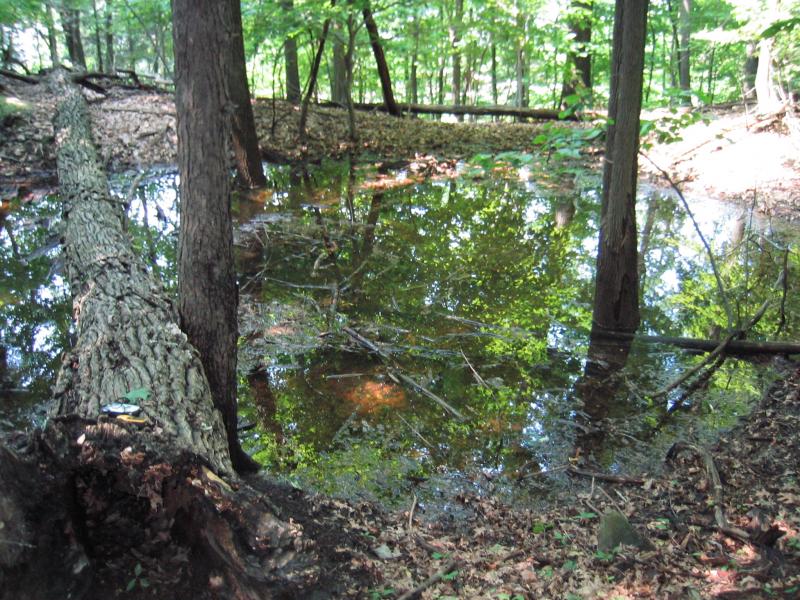
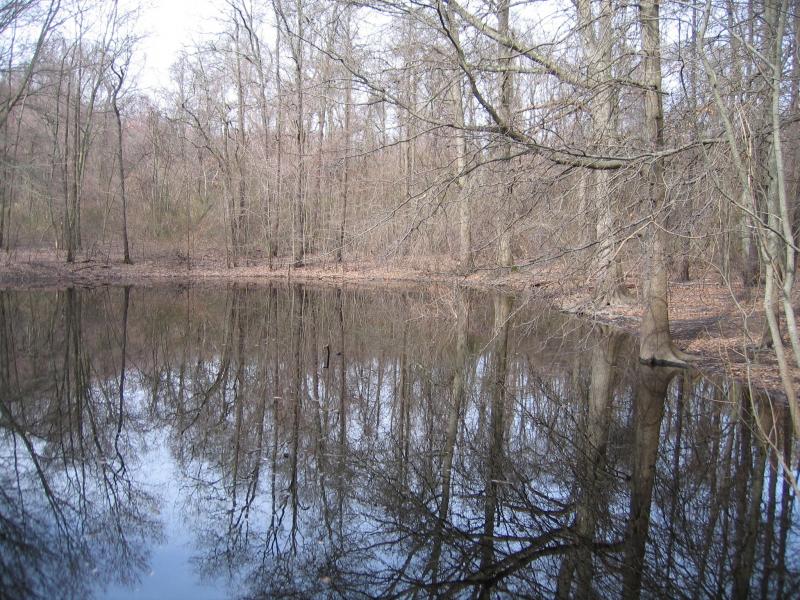
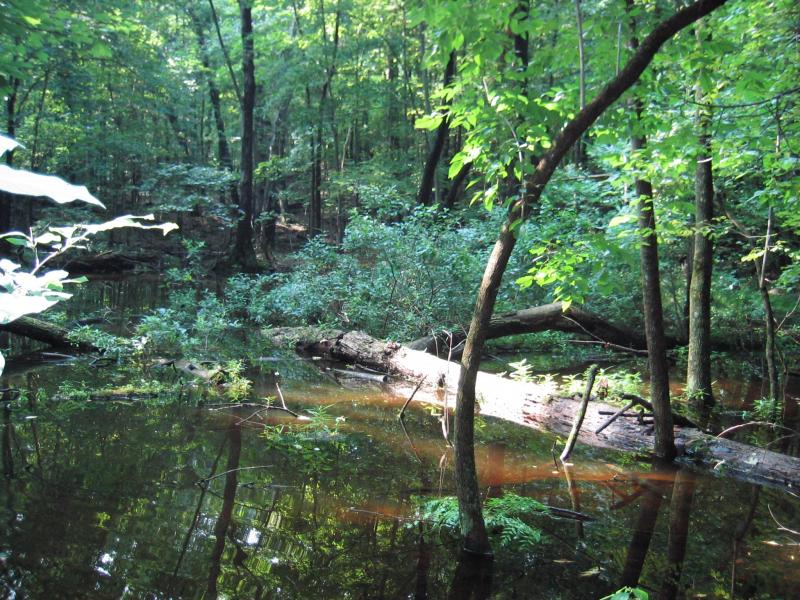
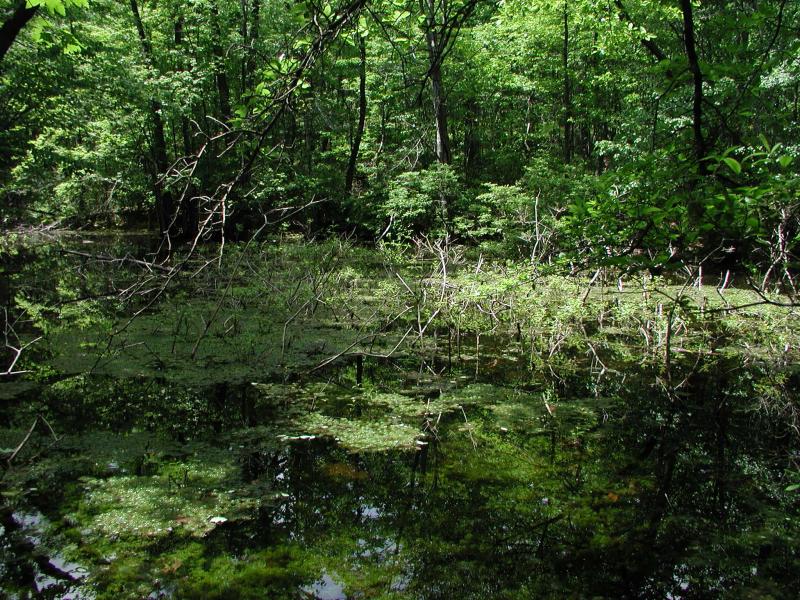
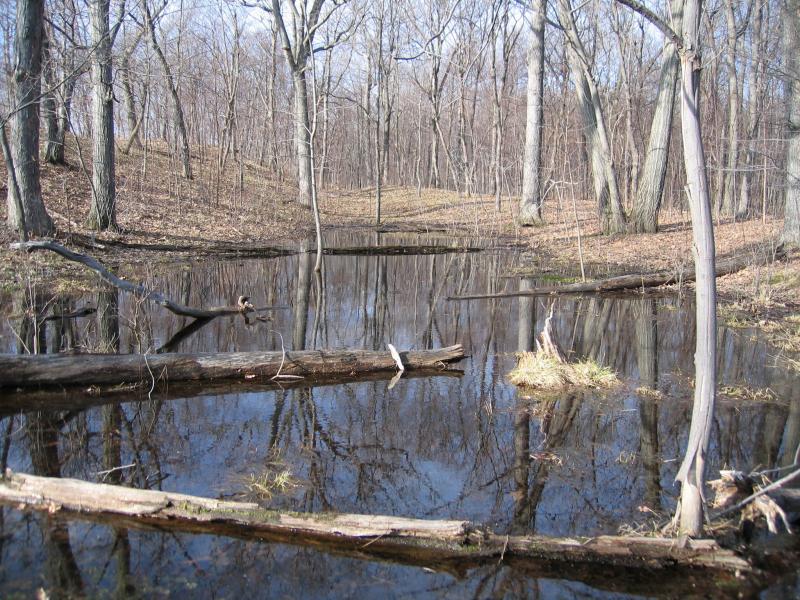
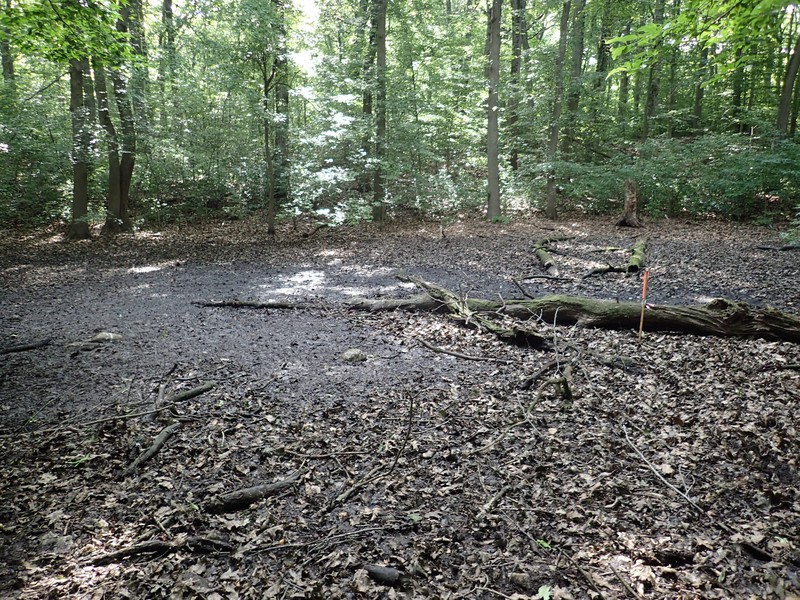
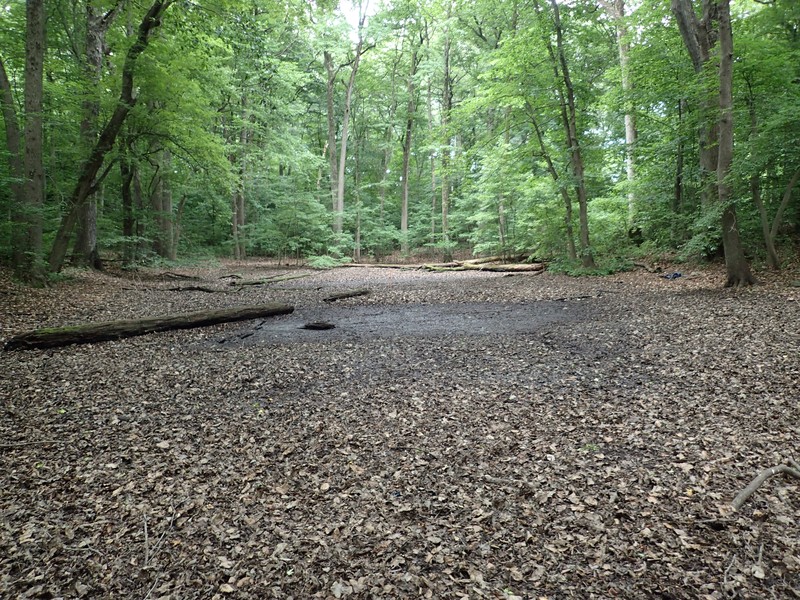
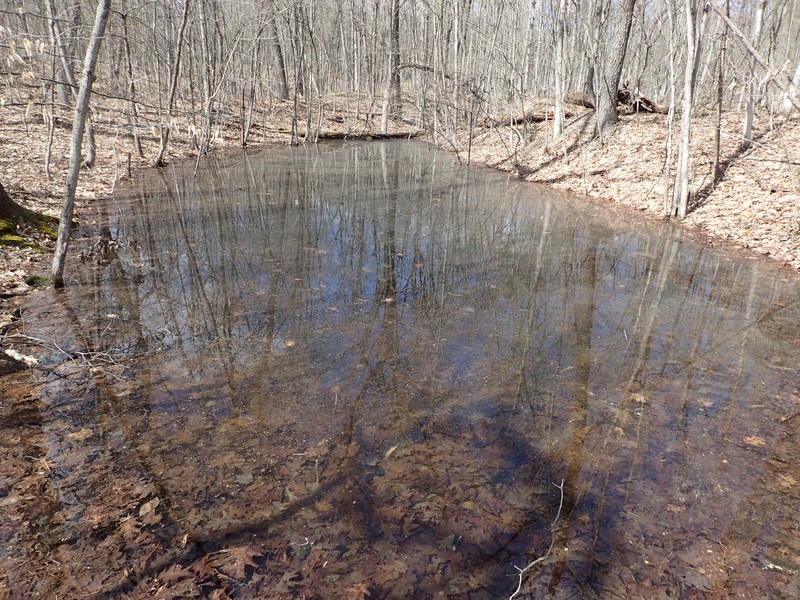
Vernal pools are intermittently to ephemerally ponded, small, shallow depressions usually located within an upland forest. They are typically flooded in spring or after a heavy rainfall, but are usually dry during summer. Many vernal pools are filled again in autumn. The substrate is dense leaf litter over hydric soils. Vernal pools typically occupy a confined basin (i.e., a standing waterbody without a flowing outlet), but may have an intermittent stream flowing out of it during high water. Since vernal pools cannot support fish populations, there is no threat of fish predation on amphibian eggs or invertebrate larvae. Characteristic animals of vernal pools include species of amphibians, reptiles, crustaceans, mollusks, annelids, and insects. Vernal pool amphibians include spotted salamander (Ambystoma maculatum), blue-spotted salamander (A. laterale), Jefferson's salamander (A. jeffersonianum), marbled salamander (A. opacum), and wood frog (Rana sylvatica). Fairy shrimp (Anostraca) are obligate vernal pool crustaceans, with Eubranchipus spp. being the most common.
Characters Most Useful for Identification
Individual vernal pools are typically small (<0.5 acre), are surrounded by upland forest with trees that overhang the pool, providing a continuous leaf litter substrate, and are generally sparsely vegetated and fishless. The presence of animals categorized as obligate vernal pool species (species that depend upon vernal pool habitat for their survival) helps confirm the identification.
Elevation Range
Known examples of this community have been found at elevations between 50 feet and 1,879 feet.
Best Time to See
Vernal pools are best observed after spring thaw when they are filled with melt water and breeding wood frogs start calling. April is generally a good month to visit vernal pools in New York (earlier to the south and later to the north). Repeat visits to the same vernal pool as the water draws down increases the chances of seeing the full array of characteristic vernal pool species at different stages of their life cycle.
Vernal Pool Images
Gregory J. Edinger
Gregory J. Edinger
Gregory J. Edinger
Gregory J. Edinger
Timothy Howard
Gregory J. Edinger
Gregory J. Edinger
Gregory J. Edinger
Gregory J. Edinger
Gregory J. Edinger
Classification
International Vegetation Classification Associations
This New York natural community encompasses all or part of the concept of the following International Vegetation Classification (IVC) natural community associations. These are often described at finer resolution than New York's natural communities. The IVC is developed and maintained by NatureServe.
- Eastern Woodland Vernal Pool (CEGL006453)
Characteristic Species
-
Trees > 5m
- Acer rubrum var. rubrum (common red maple)
- Betula alleghaniensis (yellow birch)
- Fraxinus americana (white ash)
- Fraxinus pennsylvanica (green ash)
- Quercus alba (white oak)
- Quercus bicolor (swamp white oak)
- Quercus palustris (pin oak)
- Tsuga canadensis (eastern hemlock)
- Ulmus rubra (slippery elm)
-
Shrubs 2 - 5m
- Lindera benzoin (spicebush)
- Pinus rigida (pitch pine)
- Vaccinium corymbosum (highbush blueberry)
-
Shrubs < 2m
- Cephalanthus occidentalis (buttonbush)
- Ilex mucronata (mountain holly)
- Kalmia angustifolia var. angustifolia (sheep laurel, sheep-kill)
-
Herbs
- Boehmeria cylindrica (false nettle)
- Carex canescens ssp. canescens (typical hoary sedge)
- Carex stricta (tussock sedge)
- Eleocharis acicularis (needle spike-rush)
- Lemna minor (common duckweed)
- Onoclea sensibilis (sensitive fern)
- Pilea pumila var. pumila (green-fruited clearweed)
- Thelypteris palustris var. pubescens (marsh fern)
-
Nonvascular plants
- Leucobryum glaucum
- Sphagnum spp.
Similar Ecological Communities
- Coastal plain pond
(guide)
In New York, coastal plain ponds are restricted to Long Island and are most common in the Central Pine Barrens. The ponds are generally larger than vernal pools and reveal a distinct zonation of vegetation on the pond shore as the water draws down. Coastal plain ponds may hold water throughout the year and larger examples may support fish. Vernal pools are typically small (<0.5 acre), are surrounded by upland forest with trees that overhang the pool, and are generally sparsely vegetated and fishless.
- Eutrophic pond
(guide)
Eutrophic ponds are permanently flooded and usually never completely draw down. Eutrophic ponds usually have an inlet and outlet, and support fish.
- Intermittent stream
(guide)
Vernal pools form in depressions with no inlet or outlet. Intermittent streams flow down hill in a linear streambed. Both are ephemeral aquatic communities that usually dry up as the season progresses and they share many species that depend on intermittent flooding.
- Marl pond shore
(guide)
These communities are similar in that they are associated with relatively small waterbodies that usually draw down in most years. However, marl pond shores have marl deposits on gravel substrate and vegetation, often with a mat of stranded stoneworts (Chara sp.), and lacking a continuous leaf litter substrate. Whereas, vernal pools lack marl deposits and stoneworts, and have overhanging trees that usually produce a continuous leaf litter substrate.
- Pine barrens vernal pond
(guide)
Individual vernal pools are typically small (<0.5 acre), are surrounded by upland forest with trees that overhang the pool, and are generally sparsely vegetated. Pine barrens vernal ponds are larger (>1 acre), surrounded by fire-adapted pine barren communities, and the vegetation is usually well-developed and distinct from vernal pool vegetation. The two communities are similar in that they provide habitat for many of the same animals that depend on seasonally flooded depressions to breed.
Vegetation
Percent cover
This figure helps visualize the structure and "look" or "feel" of a typical Vernal Pool. Each bar represents the amount of "coverage" for all the species growing at that height. Because layers overlap (shrubs may grow under trees, for example), the shaded regions can add up to more than 100%.
Additional Resources
References
Barbour, S. 1999. Northern Shawangunks Vernal Pools Inventory. Final Report to the Shawangunk Biodiversity Partnership. Unpublished report. Eastern New York Chapter of The Nature Conservency, Troy, New York.
Brooks, R. P., T. J. O'Connell, D. H. Wardrop. L. E. Jackson. 1998. Towards a regional index of biological integrity: The example of forested riparian ecosystems. Environmental Monitoring and Assesments 51: 131-143.
Brooks, R.T. and P.W.C. Paton. 2005. Introduction to the symposium: woodland vernal pools in northern temperate forests. Wetland Ecology and Management 13:211-212.
Brooks, R.T., J. Stone, and P. Lyons. 1998. An inventory of seasonal forest ponds on the Quabbin Reservoir Watershed, Massachusetts. Northeastern Naturalist 5(3):219-230.
Burne, M.R. and C.R. Griffin. 2005. Habitat associations of pool-breeding amphibians in eastern Massachusetts, USA. Wetlands Ecology and Management 13:247-259.
Burne, M.R. and C.R. Griffin. 2005. Protecting vernal pools:a model from Massachusetts, USA. Wetlands Ecology and Management 13:367-375.
Calhoun, A.J.K. and M.W. Klemens. 2002. Best development practices: Conserving pool-breeding amphibians in residential and commercial developments in the northeastern United States. MCA Technical Paper No. 5, Metropolitan Conservation Alliance, Wildlife Conservation Society, Bronx, New York.
Calhoun, A.J.K. and P. DeMaynadier. 2004. Forestry habitat management guidelines for vernal pool wildlife. MCA Technical Paper No. 6, Metropolitan Conservation Alliance, Wildlife Conservation Society, Bronx, New York.
Calhoun, A.J.K. and P.G. deMaynadier. 2008. Science and Conservation of Vernal Pools in Northeastern North America. CRC Press, Taylor and Francis Group, Boca Raton, FL.
Colburn, E.A. (editor). 1997. A Citizen's Step-by-Step Guide to Protecting Vernal Pools. Seventh edition, Winter 1997. Massachusetts Audubon Society, Lincoln, MA.
Colburn, E.A. 2004. Vernal Pools: Natural History and Conservation. The McDonald and Woodward Publishing Company, Blacksburg, VA. 426 pp.
Comer, P. K. Goodin, G. Hammerson, S. Menard, M. Pyne, M.Reid, M. Robles, M. Russo, L. Sneddon, K. Sno, A. Tomaino, and M. Tuffy. 2005. Biodiversity Values of Geographically Isolated Wetlands: An Analysis of 20 U.S. States. NatureServe, Arlington, VA.
Cowardin, L.M., V. Carter, F.C. Golet, and E.T. La Roe. 1979. Classification of wetlands and deepwater habitats of the United States. U.S. Fish and Wildlife Service. Washington, D.C. 131 pp.
Edinger, G. J., D. J. Evans, S. Gebauer, T. G. Howard, D. M. Hunt, and A. M. Olivero (editors). 2014. Ecological Communities of New York State. Second Edition. A revised and expanded edition of Carol Reschke’s Ecological Communities of New York State. New York Natural Heritage Program, New York State Department of Environmental Conservation, Albany, NY. https://www.nynhp.org/ecological-communities/
Edinger, Gregory J., D.J. Evans, Shane Gebauer, Timothy G. Howard, David M. Hunt, and Adele M. Olivero (editors). 2002. Ecological Communities of New York State. Second Edition. A revised and expanded edition of Carol Reschke's Ecological Communities of New York State. (Draft for review). New York Natural Heritage Program, New York State Department of Environmental Conservation. Albany, NY. 136 pp.
Flatebo, G., C.R. Foss, and S.K. Pelletier. 1999. Biodiversity in the Forests of Maine: Guidlelines for Land Management. University of Maine Cooperative Extension, Orono, ME.
Huth, P. and D. Smiley. 1981. Shawangunk Vernal Pool Report. Daniel Smiley Research Center. Mohonk Preserve, Inc. New Paltz, New York.
Kenney, L.P. and M.R. Burne. 2000. A Field Guide to the Animals of Vernal Pools. Massachusetts Division of Fisheries and Wildlife, Natural Heritage and Endangered Species Program and Vernal Pool Association, Westborough, MA.
New York Natural Heritage Program. 2024. New York Natural Heritage Program Databases. Albany, NY.
New York State Department of Environmental Conservation. 1995. Freshwater Wetlands: Delineation Manual. July 1995. New York State Department of Environmental Conservation. Division of Fish, Wildlife, and Marine Resources. Bureau of Habitat. Albany, NY.
Paton, P.W.C. and W.B. Crouch III. 2002. Using the phenology of pond-breeding amphibians to develop conservation strategies. Conservation Biology 16(1):194-204.
Reschke, Carol. 1990. Ecological communities of New York State. New York Natural Heritage Program, New York State Department of Environmental Conservation. Latham, NY. 96 pp. plus xi.
Links
About This Guide
This guide was authored by: D.J. Evans
Information for this guide was last updated on: April 4, 2024
Please cite this page as:
New York Natural Heritage Program. 2024.
Online Conservation Guide for
Vernal pool.
Available from: https://guides.nynhp.org/vernal-pool/.
Accessed April 25, 2024.